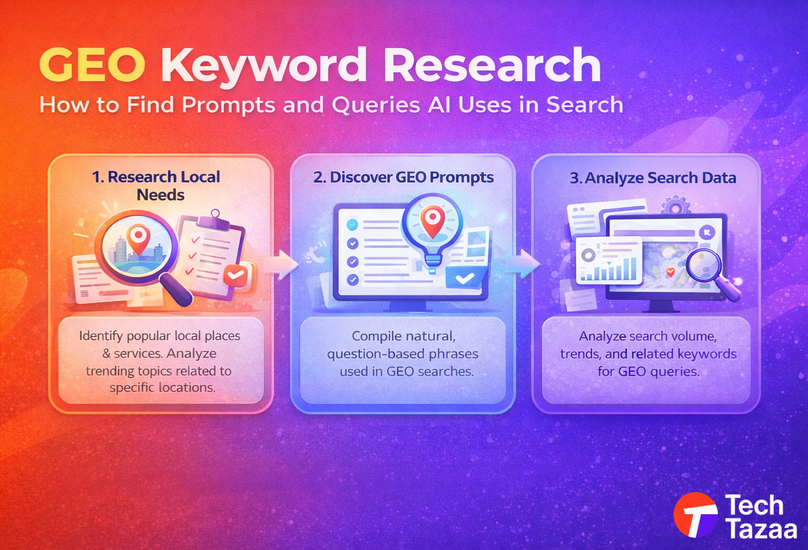

In order to understand the significance of GEO Keyword Research; also known as Keyword Research for AI Search, you first have to understand how users are searching now versus in the past and why traditional search engines function differently from AI-Based Search Engines.
Users do not search using 2 or 3 words in a box anymore. They are starting to ask full questions, give context, and want answers. AI Search Engines and AI Answering Systems differ from traditional search engines, which rely on keyword matching to provide results. Instead, these types of systems examine all aspects of a user’s search, including intent, meaning, and structure, before returning an appropriate result.
As such, GEO Keyword Research is necessary to understand the types of questions that users are asking, the various types of prompts that they are providing, and the patterns that AI Models use when determining which pieces of content to present to users.
This GEO Keyword Research Guide has been created for SEOs, content writers, founders, marketers, and anyone who desires their content to be included within AI generated Answers, Summaries, or Recommendations. The guide covers how to find the best keywords to target as it relates to AI Search, as well as converting those keywords into prompt-style content. Additionally, the guide also explains how to structure your content so that it can be easily indexed by AI Platforms.
What Is GEO Keyword Research?
Understanding Keyword Research for AI Search Engines
GEO keyword research is the process of identifying how users phrase questions and prompts when interacting with AI-powered search systems. Instead of focusing only on short phrases like “keyword research tools,” it looks at full queries such as “how do I do keyword research for AI search results.”
Traditional keyword research is often built around volume and competition. AI search keywords are built around clarity, intent, and usefulness. AI systems aim to give a complete answer, not just a list of links.
How AI Search Interprets Queries and Prompts
AI search engines treat queries as conversations. A short keyword like “GEO SEO” may not give enough context. A prompt such as “what is GEO keyword research and how is it different from SEO” provides clearer direction.
Context matters a lot. Follow-up questions, related queries, and conversational flow help AI systems decide which content best fits the user’s needs. Clear structure and direct answers increase the chances of being selected.
How AI Search Engines Choose Queries to Answer
From Keywords to Prompts: How Search Behavior Has Shifted
In classic search, users typed:
- “AI keyword research”
- “SEO keywords”
In AI search, users ask:
- “How do I find keywords for AI search engines?”
- “What is the best way to do GEO keyword research?”
This shift changes how content should be planned. Pages now need to answer questions clearly instead of repeating keyword variations.
Types of Queries AI Commonly Uses
AI systems often work with a few common query types:
- Informational queries
Example: “What is GEO keyword research in SEO?” - Comparison prompts
Example: “GEO keyword research vs traditional SEO keyword research” - Step-by-step queries
Example: “How to do prompt keyword research for AI search” - Decision-based questions
Example: “Should I optimize my content for AI search?”
Covering these formats improves visibility across multiple AI-driven results.
How to Find AI Search Keywords That Actually Rank
Identify Prompt-Based Search Patterns
Start with a short keyword, then expand it into real questions. For example:
- Short keyword: “LLM keyword research”
- Prompt: “How does LLM keyword research work for AI search engines?”
Use question modifiers like how, why, best way, should I, and what happens if. Then map each prompt to intent such as learning, comparing, or deciding.
Prompt Keyword Research Methods
One effective method is expanding seed keywords into full prompts. Take your main topic and list at least ten questions a user might ask about it.
Another method is reviewing question-based SERP features and Q&A style content. Forums, comment sections, and community posts often show how people naturally phrase prompts.
Internal site search data is also useful. It reflects how real visitors ask questions once they are already on your site.
LLM Keyword Research: Thinking Like the Model
Large language models choose answers that are easy to summarize. They prefer content that:
- Answers one question per section
- Uses clear headings
- Avoids vague or promotional language
When doing LLM keyword research, write headings that sound like direct answers. A heading like “How GEO Keyword Research Works for AI Search” is easier for a model to understand than a clever or abstract title.
Tools and Sources for GEO Keyword Research
Free Sources for AI Search Keywords
Some of the best ideas come from free sources:
- Search suggestions and auto-complete
- “People also ask” style questions
- Community platforms and discussion boards
- Internal search logs from your website
These sources reflect natural language, which is what AI systems rely on.
Paid Tools That Help With Keyword Research for AI Search
Paid SEO tools can help identify question-based keywords and intent patterns. Look for features that show full queries, not just keyword strings.
When evaluating keywords, focus less on raw volume and more on clarity, relevance, and how well the query matches a complete answer.
How to Structure Content for AI Search Visibility
Writing Headings AI Can Understand
Each heading should cover one clear idea. Avoid mixing topics. For example:
- Good: “How to Do Prompt Keyword Research”
- Not ideal: “Keyword Research Tips and SEO Tricks”
Use H2s for main questions and H3s for supporting points. This makes it easier for AI to extract and reuse your content.
Optimizing for AI Snippets and Answer Blocks
Place a short, direct answer right after each heading. Lists and tables help when explaining steps or comparisons. Simple language works better than complex phrasing.
Images, charts, or simple diagrams can help explain processes. Use descriptive alt text so AI systems understand the visual context.
Common Mistakes in GEO Keyword Research
Many teams still focus only on search volume, which can miss real intent. Others ignore conversational queries and write content that never directly answers a question.
Another common issue is overloading a page with loosely related prompts. One page should focus on one main topic and a clear set of related questions.
FAQs: GEO Keyword Research and AI Search
What is GEO keyword research in SEO?
It is the practice of finding prompt-based queries that AI search engines use to select answers.
How is keyword research for AI search different from Google SEO?
AI search focuses more on intent, clarity, and structure than on exact keyword matches.
What are AI search keywords?
They are usually full questions or prompts rather than short phrases.
How do I do prompt keyword research?
Start with seed keywords, expand them into real questions, and group them by intent.
What is LLM keyword research?
It focuses on writing and structuring content in a way that language models can easily summarize.
Can GEO keyword research help content appear in AI tools?
Yes, well-structured answers improve visibility across AI-driven search experiences.
Internal and External Linking Strategy
Use internal links to related SEO, AEO, and content strategy pages using descriptive anchor text based on questions. This helps AI systems understand topical relationships.
External links should point to trusted research, documentation, or case studies. Keep them relevant and avoid adding too many on a single page.
Conclusion: Start Using GEO Keyword Research Today
If you want to improve your ability to get found organically via a search engine then it is critical that you conduct keyword research for AI search. Gone are the days of simply using keywords as the driving factor in the way you write your content. Rather, you now need to be aware of how AI works and therefore write content that meets their needs.
By being clear about what the user is trying to find when they search, providing a simple structure within the content and providing a straightforward answer to what has been asked, you make it easy for the AI system to understand your content and thus be able to use it.
To implement the above framework in your next article use the same principles to review older content, and if an article does not answer questions in the AI style you should change or add to the existing article until it does. To speed up the process of utilizing this information to create quality content, you could consider creating a keyword-to-prompt mapping sheet and then using the sheet as the basis for all new articles.