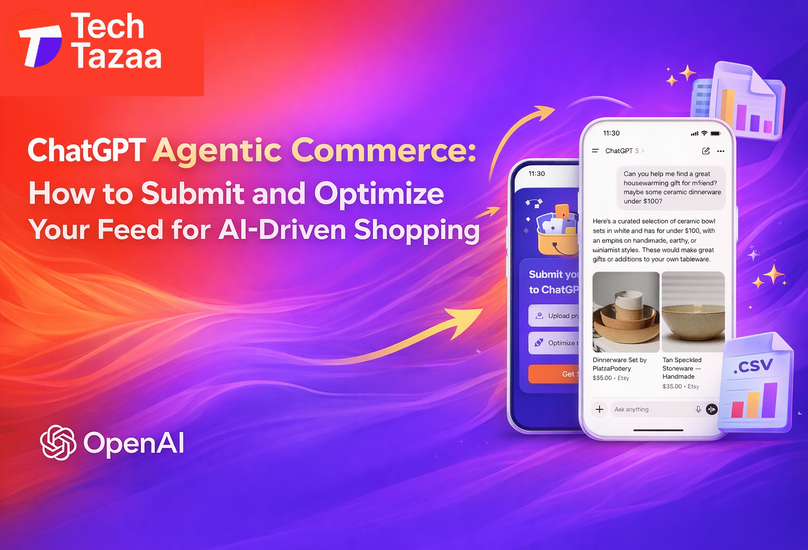

AI is no longer just answering questions. It is starting to shop on behalf of users. That shift is exactly what ChatGPT Agentic Commerce is about. Instead of people scrolling through pages of results, AI agents compare options, filter products, and recommend what fits a buyer’s intent. For ecommerce brands, this changes how visibility works and it starts with your product feed.
In this guide, you’ll learn what ChatGPT Agentic Commerce is, how product feeds fit into it, how to submit your feed, and how to optimize it so AI agents can understand, trust, and recommend your products.
Understanding Agentic Commerce in ChatGPT
What Is Agentic Commerce?
Agentic commerce refers to AI systems that act on a user’s behalf. Rather than showing ten blue links, an AI agent understands a request like “find a budget running shoe for daily use” and actively evaluates products to suggest the best match.
Traditional search puts the burden on the user to compare. Agentic commerce shifts that work to the AI. Your product either qualifies for recommendation or it doesn’t.
That difference is why clean data matters more than ever.
How ChatGPT Uses Product Feeds
ChatGPT relies on structured inputs to understand products at scale. Product feeds provide that structure. They tell the AI what a product is, how much it costs, whether it is in stock, and who it is best for.
When feeds are well organized, AI agents can:
- Compare similar products accurately
- Match products to user intent
- Avoid recommending outdated or unavailable items
When feeds are messy, products simply get ignored.
Who Should Submit a Feed to ChatGPT Agentic Commerce
Submitting a product feed is not just for large marketplaces. Several types of businesses benefit.
- Ecommerce brands gain a new discovery channel beyond search and ads.
- D2C stores get a chance to appear without competing purely on bids.
- Marketplaces and aggregators can surface the best options faster.
- Subscription or SaaS products can also benefit when plans, pricing, and use cases are clearly defined.
If your product can be compared, recommended, or filtered, a feed matters.
How to Submit Your Product Feed to ChatGPT
Feed Submission Requirements
While exact specifications may evolve, strong AI commerce feeds usually include:
- Structured formats such as CSV, XML, or JSON
- Core attributes like product name, price, availability, category, and URL
- Optional but helpful attributes like brand, images, variants, and descriptions
Freshness is critical. Outdated pricing or stock data reduces trust.
Step-by-Step Feed Submission Process
- Prepare your feed: Start with a clean export from your ecommerce platform. Remove duplicate or inactive products.
- Standardize attributes: Use consistent naming, units, and formats across all items.
- Validate the data: Check for missing prices, broken links, or mismatched categories.
- Submit through supported channels: This may include direct integrations, approved partners, or platforms that already share data with AI systems.
Common Feed Submission Mistakes to Avoid
- Missing product attributes that prevent comparison
- Vague product titles that lack context
- Pricing or availability that differs from your website
Small errors add up quickly at scale.
How to Optimize Your Feed for ChatGPT Agentic Commerce
Product Titles That AI Agents Understand
Product titles should be descriptive, not clever. A solid structure works best:
Brand + product type + key detail
For example, “Nike Men’s Running Shoes Lightweight” is easier for AI to place than a creative slogan.
Avoid stuffing keywords. Clarity wins.
Writing Product Descriptions for AI-Driven Shopping
Descriptions should answer real buyer questions:
- Who is this product for?
- What problem does it solve?
- What makes it different from similar options?
Write in natural language. AI agents interpret meaning better than marketing fluff.
Category Mapping and Product Taxonomy
Correct categorization helps AI narrow choices quickly. A product placed in the wrong category may never be considered.
Map products to the closest possible category and keep taxonomy consistent across your site and feed.
Images, Pricing, and Availability Signals
High-quality images help validate product legitimacy. Pricing and availability should always match your website.
Consistency across platforms builds trust signals that AI systems rely on.
SEO Signals That Help ChatGPT Recommend Your Products
Feeds do not work in isolation. Your website supports them.
- Structured data such as Product and Offer schema helps confirm feed details
- Clear product pages reinforce titles, descriptions, and pricing
- Brand trust signals like reviews, policies, and contact information support credibility
Think of your site as the source of truth behind the feed.
Measuring Performance in Agentic Commerce
Key Metrics to Track
Agentic commerce performance is not always obvious, but useful signals include:
- Product visibility in AI shopping results
- Referral traffic from AI-driven experiences
- Conversion trends for recommended products
How to Improve Results Over Time
- Update feeds regularly
- Test product titles and descriptions
- Remove products that underperform or confuse categorization
Optimization here is ongoing, not one-time.
FAQs: ChatGPT Agentic Commerce and Feed Optimization
What is ChatGPT agentic commerce?
It is a model where AI agents recommend and compare products on behalf of users instead of showing traditional search results.
Can any ecommerce store submit a feed to ChatGPT?
Most stores can prepare a feed. Access depends on supported formats and integrations.
What format is best for ChatGPT product feeds?
Structured formats like JSON or XML work best, but consistency matters more than format.
How often should I update my product feed?
Daily updates are ideal for pricing and availability. At minimum, update whenever inventory changes.
Does agentic commerce replace Google Shopping?
Not yet. It complements it. Brands that prepare early gain an advantage as AI-driven shopping grows.
Conclusion
ChatGPT Agentic Commerce is changing how products get discovered. Instead of competing only on ads or rankings, brands now compete on data quality. A clean, well-structured product feed helps AI agents understand your products, trust them, and recommend them to the right buyers.
If you want your products ready for AI-driven shopping, start by reviewing your feed structure, product titles, and descriptions today. Small improvements now can decide who gets recommended tomorrow.